Play two strings at once on the fiddle and something changes. The sound gets fuller, the rhythm gets a little more weight, and a plain phrase can suddenly ring like a set of pipes. That is a double stop. In bluegrass and old-time music, fiddle double stops are everywhere. In Irish traditional music they are used more sparingly, but when they are used well they are one of the most satisfying sounds the instrument can make.
This guide is for intermediate players who want to start adding double stops in an Irish style: what they are, how to bow them cleanly, how to keep them in tune, and where they belong in a tune.
What Is a Double Stop on the Fiddle?
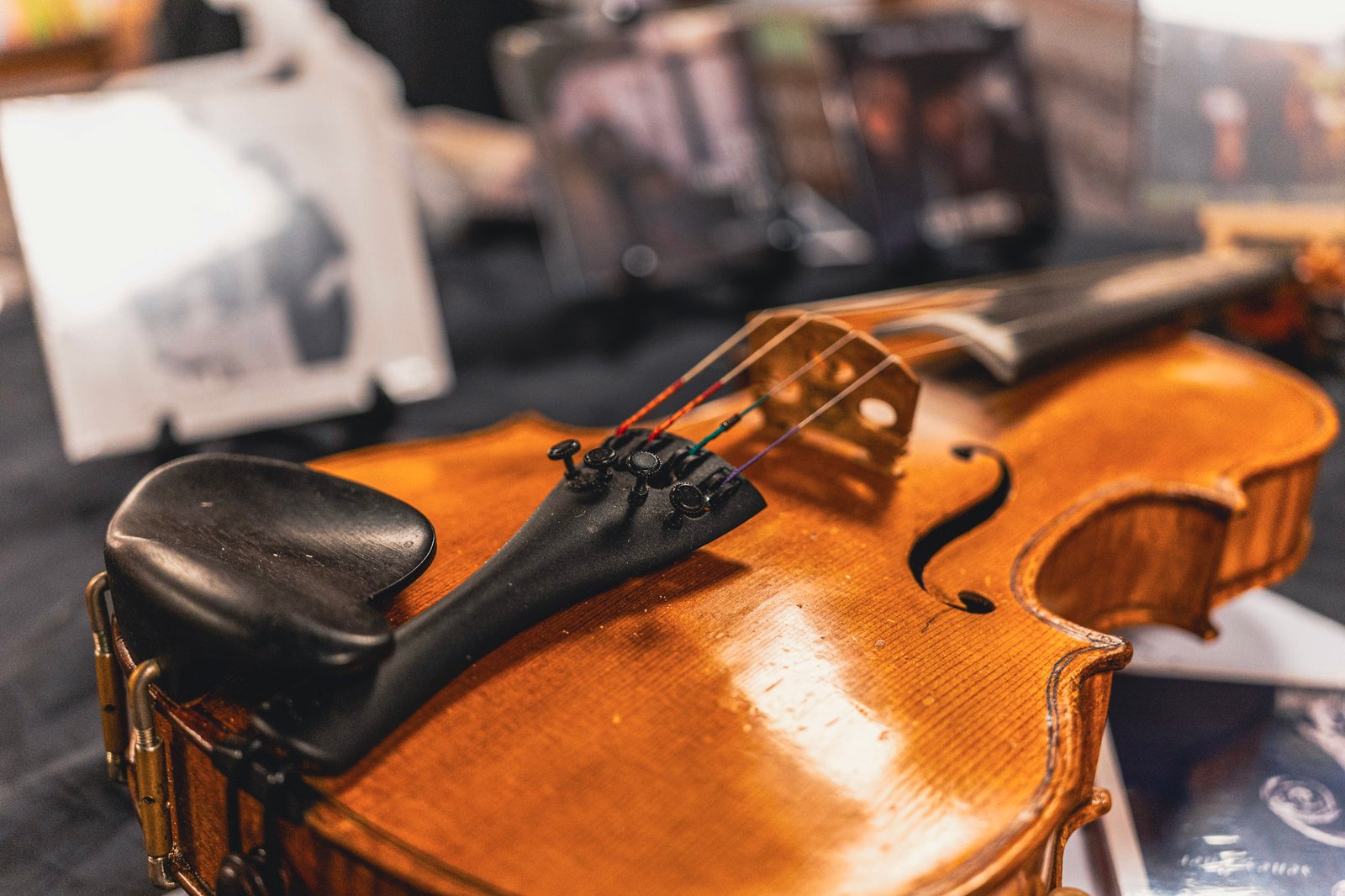
A double stop is two notes played at the same time on two neighbouring strings. The name comes from “stopping” a string, which means pressing it down with a finger. Strictly speaking, a true double stop has a finger on both strings, but fiddlers use the term for any two-string sound, including one fingered note played against an open string.
On the fiddle you can only play double stops on strings that sit side by side: G and D, D and A, or A and E. The bow has to sit level across both strings at once, which is why double stops are as much a bowing skill as a left-hand one.
In Irish music, double stops are mostly about resonance and rhythm rather than harmony, and the most useful ones are also the simplest.
How Double Stops Are Used in Irish Fiddle Music
Open-String Drones
The most common double stop in Irish music is the drone. You play the melody on one string and let the open string beside it sound along with it. In a tune in D, playing a phrase on the A string while the open D string rings underneath gives a full, pipe-like sound. In a tune in G, the open G or open D does the same job.
Drones work best on notes that belong to the key of the tune, especially the home note and the fifth. Where a melody note clashes with the drone, simply lift the bow back to a single string for that note.
The Ringing Unison
This is a favourite with many traditional players. Put your fourth finger on the D string and you get an A, the same pitch as the open A string beside it. Play both together and the two strings ring in unison. The same works with the fourth finger on the A string against the open E, and the fourth finger on the G string against the open D.
The unison is a great place to start because your ear gets instant feedback. When the fingered note is perfectly in tune, the two strings lock together and the sound blooms. When it is slightly off, you will hear a wavering beat.
Strong Beats and Final Notes
A double stop adds weight, so it falls naturally on a strong beat or at the end of a phrase. Many players finish a tune in D with the open D and open A strings together, or end a phrase with a short drone to mark the end of a part. It works much like an accent from the bow.
Regional Styles
How much double stopping you hear depends on where a player learned. The Donegal fiddle tradition in particular is known for open-string drones and double stops, often with a driving, bowed attack. Other regional styles use them far less, and lean more on ornaments such as cuts and rolls. Listening to players from different regions is the best way to find what suits you.
Getting the Bow Right
Most problems with double stops start in the right arm, not the left hand, so spend time on the bow alone first.
Find the Double-String Levels
Your bow arm has four single-string levels, one for each string, and three double-string levels in between: G and D, D and A, A and E. Each level is a slightly different height of the elbow. Play long, slow bows on open G and D together, then D and A, then A and E. Aim for an even sound on both strings from the frog to the tip. If one string fades out, adjust your arm height rather than pressing harder.
Use Weight, Not Pressure
Pressing down to keep both strings sounding produces a choked, scratchy tone. Let the natural weight of the arm sit into the strings, and keep the bow moving at a steady speed. A slightly slower bow, with the contact point a little closer to the bridge than usual, often helps both strings speak clearly.
Practise the Crossings
In tunes you will move in and out of double stops constantly. Practise rocking from a single string to the double-string level and back without a bump in the sound. This is the same control you need for smooth string crossings in jigs and reels, which is why work on the bow pays off everywhere. There is more on this in why Irish fiddle bowing matters more than the notes.
Keeping Double Stops in Tune
Intonation is the other half of the job. A double stop that is slightly out of tune is far more noticeable than a single wrong note, because the two strings rub against each other.
- Tune each note on its own first. Play the fingered note alone, check it against the open string, then add the second string.
- Listen for the beating. A fast wobble in the sound means the interval is out of tune. Move the finger slowly until the wobble slows and disappears.
- Keep the finger shape relaxed. A collapsed or flattened finger can catch the neighbouring string and mute it. Aim for a rounded finger that touches only the string it is meant to.
- Adjust the left elbow. Bringing the elbow slightly further under the fiddle for the lower strings, or slightly out for the higher ones, helps the fingers land cleanly without straining the wrist.
Your instrument matters too. Old strings or a badly shaped bridge make double stops hard to balance, so a well set-up fiddle and bow makes the whole job easier.
Where to Add Double Stops in a Tune
The skill is not playing double stops. It is choosing where they go. A few guidelines that hold good across most of the tradition:
- Long notes first. A crotchet or dotted crotchet in a jig gives you time to settle the bow on two strings. Fast runs of quavers usually do not.
- Strong beats and phrase ends. These are where a double stop adds lift rather than clutter.
- Notes that already suit a drone. If the open string beside your melody note is part of the key, it will usually sound well.
- The second time round. Many players keep the first pass of a tune plain and add double stops as variation later.
Slow airs and waltzes are also a natural home for drones, because the long notes give the strings time to ring. This is why drones sit alongside cuts and vibrato in Week 9 of Bow with the Flow, which is given over to slow airs.
Double Stops in a Session
In a session, a little goes a long way. Heavy double stopping can blur the melody for everyone else. Play them lightly, keep the melody on top, and if in doubt, save them for smaller groups.
A Simple Practice Routine
- Open strings, two minutes. Long, slow bows on each pair of open strings. Listen for an even sound on both strings.
- Unisons, two minutes. Fourth finger on the D string against open A, then on the A string against open E. Move the finger until the beating stops.
- Drone scale, three minutes. Play slowly up and down the A string in first position, A, B, C sharp, D and E, with the open D ringing underneath. Notice which notes sound sweet and which clash.
- One tune, five minutes. Take a jig you know well. Add a single double stop on one long note in each part. Play it until it feels natural, then try one more.
- Record and listen. Play the tune once plain and once with double stops. Decide honestly which sounds better.
Common Mistakes With Fiddle Double Stops
Pressing Too Hard
Forcing the bow into the strings to keep both sounding gives a harsh, crunchy tone. Find the right arm level and let the weight do the work.
Losing the Rhythm
Many players hesitate before a double stop. The beat has to stay steady, so if one makes you late, leave it out until the bowing is secure.
Using Them Everywhere
Just like ornaments, double stops lose their effect if they are on every note. The same lesson applies as with cuts and rolls: fewer, well placed choices almost always sound better.
Bringing Classical Habits Straight Across
Classically trained players often reach for thirds and sixths, which tend to sound out of place in dance tunes. Start with drones and unisons instead. The guide to fiddle vs violin covers the wider changes.
Try the Free Week 1 Lesson
Clean double stops depend on bow control: knowing which string level you are on, using the full length of the bow, and moving between strings without a bump. That is exactly where Bow with the Flow begins. It is Gerry O’Connor’s 10-week online Irish fiddle course for intermediate players, and Week 1 is free to watch.
In Week 1, Gerry looks at how you use the full length of the bow, why where you start and finish a phrase matters, and slurs, string crossings, rolls, cuts and triplets through two double jigs and a waltz.
Watch the free Week 1 lesson of Bow with the Flow
The course comes in two formats, Self-Guided and Live Mentored. Self-Guided students keep lifetime access after the 10 weeks and can switch to Live Mentored later. You can compare both on the online courses page, find out more about Gerry’s teaching, or read about his teaching and coaching over the years.
Frequently Asked Questions
What is a double stop on the fiddle?
A double stop is two notes played at the same time on two neighbouring strings. It can be one fingered note against an open string, or a finger on both strings. In Irish music the most common types are open-string drones and unisons.
Do Irish fiddle players use double stops?
Yes, but usually more sparingly than in bluegrass or old-time music. Irish players use them mainly as drones, unisons and accents on strong beats or phrase endings. The Donegal tradition in particular is known for open-string drones and double stops.
Are double stops hard to play?
Simple ones are not. Open-string pairs and drones are well within reach of an intermediate player. The harder part is keeping both notes in tune and keeping the bow level and steady, which takes some slow, regular practice.
What are the easiest double stops to start with?
Start with two open strings together, then drones where you play a melody note against an open string. After that, try the unison: fourth finger on the D string with the open A, or fourth finger on the A string with the open E.
How do you keep double stops in tune?
Tune each note on its own first, then play them together and listen for a wavering beat in the sound. Move the fingered note slowly until the beating disappears. Keep fingers rounded so they do not touch the neighbouring string.
Should I learn ornaments or double stops first?
Most players get more from good bowing and basic ornaments such as cuts and rolls first, since they are central to Irish dance music. Simple drones can be added at the same time, because they rely on the same bow control.