Ask ten musicians about the difference between a fiddle and a violin and you will hear the same old joke: a violin sings, a fiddle dances. Like most good jokes, it is close to the truth. In the fiddle vs violin question, the instrument barely changes at all. What changes is the music you play on it, and how you play that music.
This guide is for intermediate players, and especially for anyone with some classical violin behind them who wants to play Irish traditional music properly. It covers what is really different, what carries over, and what to work on first.
Is a Fiddle the Same as a Violin?
Yes. Physically, a fiddle and a violin are the same instrument: four strings tuned G, D, A, E, the same body, the same bow. A violin made in a German workshop in the 1890s, like the Hammig instruments written about here, can spend its morning in an orchestra and its evening in a pub session without anything being changed.
Some fiddlers do adjust their set-up. Steel strings, fine tuners on all four strings, or a slightly flatter bridge are common in some traditions, particularly American old-time and bluegrass. Most Irish players, though, use a fairly standard violin set-up. If your instrument is in good playing order, you do not need a different one to play Irish music. If it needs attention, a proper repair or bow rehair will do more for your sound than any change of strings.
So the real difference between fiddle and violin is not wood and strings. It is style, rhythm, repertoire and the way the music is learned.
Where the Real Differences Lie
The Music Comes From Dance
Irish traditional music is, at its heart, dance music. Reels, jigs, slip jigs, hornpipes, polkas and slides each have their own rhythm and their own feel. A reel moves in four, a double jig rolls along in groups of three, a slip jig has that lilting nine-beat pattern, and a hornpipe has a stronger swing.
Classical training teaches you to respect the written rhythm precisely. Irish music asks for something slightly different: a pulse that makes a dancer want to move. Players call it lift. It comes from where you place the weight in the bar, not from playing faster or louder. A reel played with perfectly even notes can sound correct and still feel flat.
The Bow Does the Work
For most classical players, bowing is the biggest adjustment. Classical technique often aims to hide bow changes and produce a smooth, even line. In Irish music, the bow is the rhythm section. Slurs that cross the beat, notes slurred into a strong beat, and short bowed figures all create the pulse that drives a tune.
There is no single correct set of bowings, and players from different regions bow the same tune in different ways. What matters is that your bowing serves the rhythm rather than fighting it. That is why it pays to build real control over the whole length of the bow first, so you can choose where to be when a phrase needs more room. There is a longer explanation of this in why Irish fiddle bowing matters more than the notes.
Ornamentation Replaces Vibrato
Classical violin uses vibrato as a core part of tone. In Irish dance music, vibrato is used sparingly, if at all. Some players use it on slow airs, but in reels and jigs the expression comes from ornaments instead: cuts, rolls, slides and bowed triplets. The crann, a pattern borrowed from the uilleann pipes, turns up less often on fiddle but is worth knowing.
These ornaments are not decoration added on top. They are rhythmic tools, placed to give a note weight or emphasis at the right moment. If you are new to them, start with the guide to Irish fiddle ornamentation, cuts and rolls.
Tone and Volume
A classical player is trained to project into a concert hall. In a session, you are one voice among fiddles, flutes, concertinas, accordions and guitars. A clear, direct tone that sits inside the group usually works better than a big, soloistic sound. That does not mean playing weakly. It means listening, and matching your sound to the music around you.
Learning by Ear and the Written Page
Classical music is learned from the page, and the page is the authority. Irish music has always been passed on by ear, from player to player. Notation is useful as a memory aid, and many good courses use it, but the written version of a tune is a sketch, not the tune itself. The same reel can have several settings, and players will vary it a little each time round.
For a classical player, this is often the part that feels strangest. The fix is simple, if not quick: listen a great deal, learn short phrases by ear, and use the notation to check rather than to lead.
What Classical Violinists Already Bring
None of this means starting again. A violinist moving into Irish music brings real advantages:
- Good intonation and a reliable left hand, so new tunes come quickly
- Bow control, which makes Irish bowing patterns easier to learn once you understand what they are for
- The ability to read, which speeds up learning when used alongside the ear
- Practice discipline, which matters as much in traditional music as anywhere else
The task is less about learning new skills from nothing and more about pointing existing skills in a new direction.
Common Mistakes When Switching From Violin to Fiddle
Playing Too Evenly
Every note the same length and the same weight is a classical virtue that works against dance music. Listen for where good players lean on the beat and where they let notes fall away.
Rushing the Tempo
Session speed is tempting. But a reel played at a steady, moderate tempo with good lift sounds far better than one played fast and flat. Speed comes later, and it comes more easily once the rhythm is settled.
Ornamenting Everywhere
Once players learn rolls and cuts, they often put them on every long note. Good ornamentation sounds as if the tune asked for it. Fewer, well placed ornaments almost always beat more.
Leaving the Bow on Autopilot
Separate bows on every note will get you through a tune, but they rarely give it life. Experiment with slurring across the beat and listen to the difference it makes to the swing of a jig.
How to Start Playing Irish Fiddle Well
A practical way to begin, whatever your background:
- Pick one tune type, usually the double jig, and learn three or four good tunes in it before moving on.
- Listen to several recordings of each tune, ideally from different regions, and notice how bowings and ornaments differ.
- Work on bowing slowly. Try a tune with different slurs and decide which gives it the most lift.
- Add ornaments one at a time, starting with cuts, then rolls.
- Play with other people when you can. A session, a friend with a guitar, or even a recording to play along with will teach you more about rhythm than practising alone.
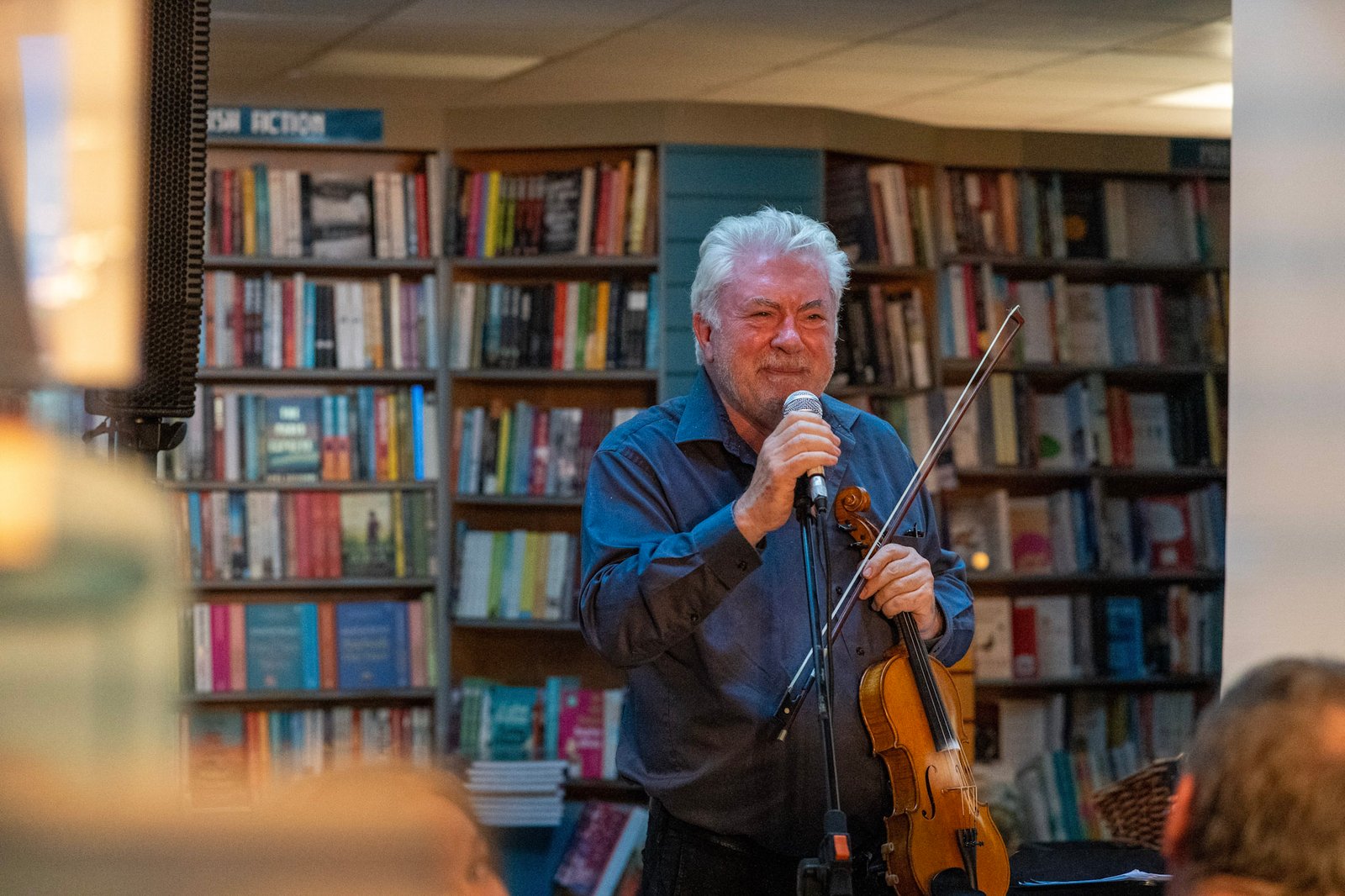
Structured teaching helps too, because a good teacher can hear in a minute what you might take months to notice yourself. Gerry O’Connor teaches in person and online, and he has a long history of teaching and coaching alongside his life as a performer.
Try the Free Week 1 Lesson
Bow with the Flow is Gerry’s 10-week online Irish fiddle course for intermediate fiddle and violin players. It is not for complete beginners, which makes it a good fit if you already play violin and want to bring your playing into the Irish tradition.
Week 1 is free to watch. It starts with the foundations of bow control: using the full length of the bow, why it matters where you start and finish a phrase, and a first look at slurs, string crossings, rolls, cuts and triplets through jigs and a waltz.
Watch the free Week 1 lesson of Bow with the Flow
If you enjoy it, the course comes in two formats, Self-Guided and Live Mentored. Self-Guided students keep lifetime access after the 10 weeks and can switch to Live Mentored later. You can compare both on the online courses page.
Frequently Asked Questions
Is a fiddle the same as a violin?
Yes. A fiddle and a violin are the same instrument with the same tuning. The difference is the style of music and the way it is played. Some fiddlers adjust their set-up, but most Irish players use a standard violin set-up.
Can a classical violinist learn Irish fiddle?
Yes, and many do very well. Intonation, bow control and reading all carry over. The main adjustments are rhythm and lift, Irish bowing patterns, ornamentation in place of vibrato, and learning tunes by ear.
Do Irish fiddle players read sheet music?
Many do, but the tradition is learned mainly by ear. Notation is useful as a memory aid and in structured courses, but the written version of a tune is a guide, and players vary tunes as they play them.
Do I need a different instrument or set-up to play Irish fiddle?
No. Any violin in good playing order will do. Some players prefer particular strings or fine tuners, but a well set-up instrument and a bow in good condition matter far more than any special fiddle set-up.
Do Irish fiddlers use vibrato?
Rarely in dance tunes. Expression in reels and jigs comes mainly from bowing and ornaments such as cuts, rolls and slides. Some players use a little vibrato on slow airs.
Can the fiddle be self-taught?
Parts of it can, especially learning tunes by ear from recordings. But bowing and ornamentation are physical skills, and feedback from an experienced teacher saves a lot of time and stops bad habits setting in early.